
Clan Ramheart
Keepers of Horn and Hearth
Virtues: Honor • Tradition
Symbol: The Golden Warhorn
Saying: “By Horn and Honor.”
Color: Green and Gold
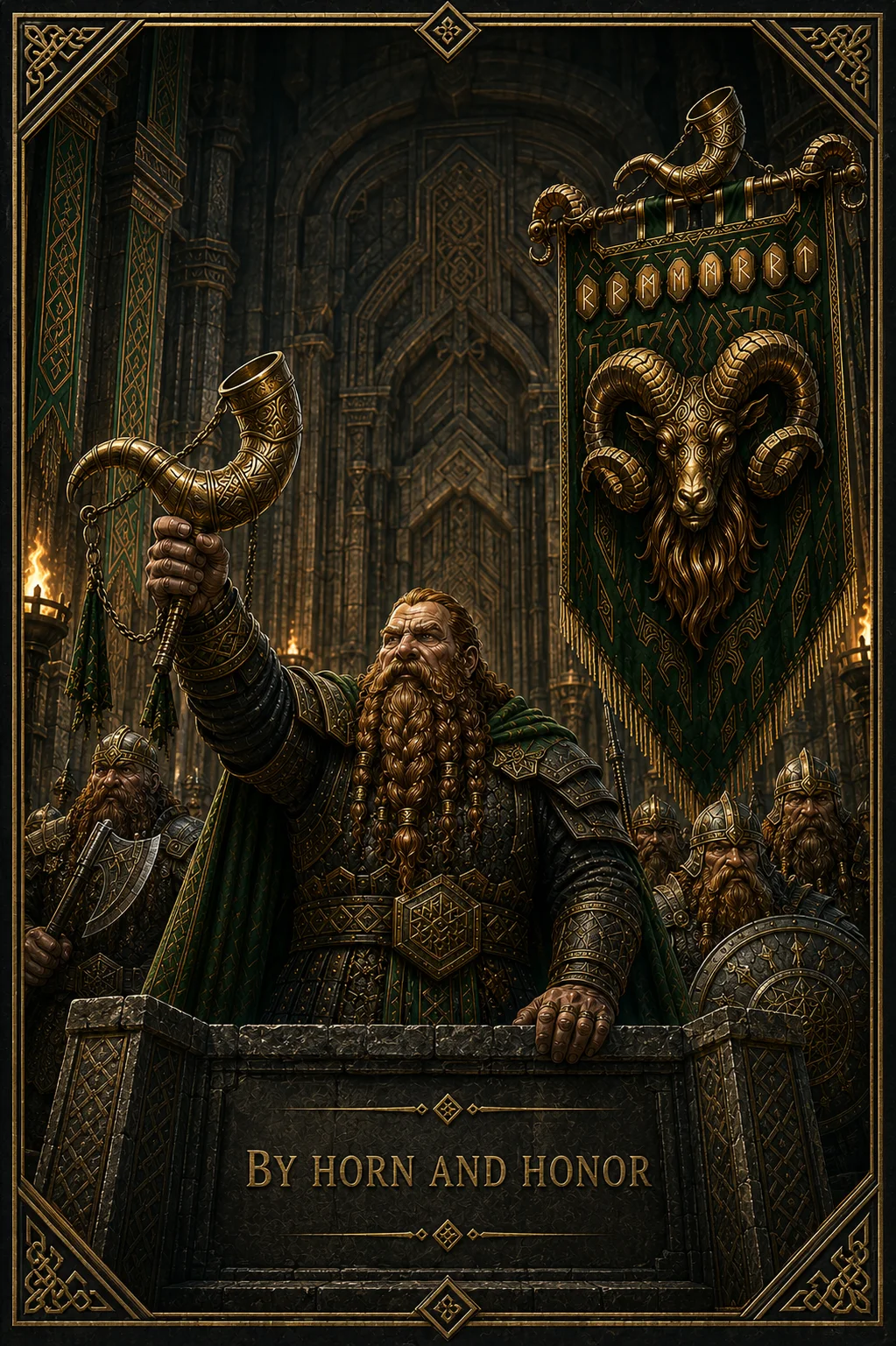
The Origin Legend
Ramheart tradition tells of an ancient dwarven host trapped beyond the mountains after their road home was destroyed. Winter descended upon them. Food dwindled. Paths vanished beneath the snow. One by one, the fires of their encampment began to disappear. Their leader was Ramhir the Horn-Bearer. He possessed no crown and claimed no throne. He carried only an old golden warhorn passed down through his family for generations. When scouts reported that the final mountain pass had collapsed, many believed their people were doomed.
Ramhir climbed alone to the highest ridge. There he sounded his horn. Once for those still living. Once for those who had fallen. And once for those who had yet to be born. The sound rolled through the mountains. Dwarven miners searching from the opposite side of the range heard its distant call and began digging toward it. For three days and three nights, Ramhir returned to the ridge and sounded the horn so they would know where to dig.
Eventually, stone broke. The survivors were brought home. Ramhir refused every reward offered to him, saying: “Remember the names of those who did not return. That will be payment enough.” Those who followed him became the first Ramhearts. Whether every part of the tale is true has been argued over many barrels of ale. The Ramhearts do not particularly care. To them, its meaning matters more: A Ramheart remembers and ensures others are remembered.
Rite of Passage — The Naming Before the Horn
A young Ramheart does not become a full member of the clan merely through age. They must prove that they understand what they inherit. Before their ceremony, they are entrusted with the story of a deceased member of their family or clan. They learn that dwarf's name, their deeds, their failures, their victories, and their sacrifices. During the ceremony, the candidate stands before the assembled clan and tells that story from memory. When the tale is finished, an elder asks: “And when your name is spoken after you are gone, what shall be remembered?” The candidate must answer in their own words. There is no correct response. Afterward, the clan's ceremonial horn is sounded and the dwarf is recognized as one who may now carry the history of Ramheart forward. From that day onward, they are expected not merely to know the traditions of the clan, but someday to add something worthy to them.
Military Tradition — The Horn Companies
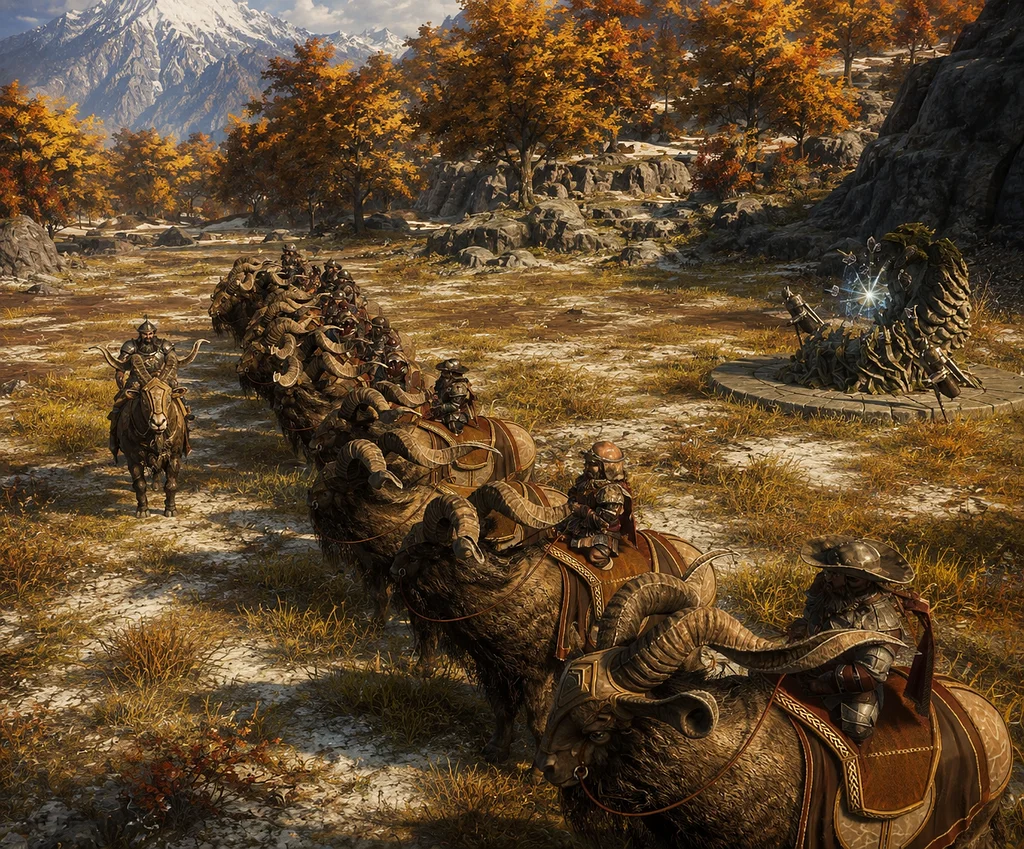
Ramheart warriors traditionally organize themselves around Horn Companies, serving primarily as Dünhold’s cavalry and scouting forces. Where other dwarven formations are built to hold ground or break fortified positions, the Ramhearts are trained to range ahead of the main host, patrol Dünhold’s borders, locate threats, chart safe routes, screen advancing armies, and carry word swiftly between distant forces. Their mounted companies provide Dünhold with something invaluable upon the battlefield: eyes, ears, and speed.
Their military culture emphasizes coordination, discipline, battlefield communication, and maintaining order when confusion threatens to scatter the ranks. Ramheart scouts are expected to know the land before the army ever marches across it, while their cavalry is trained to strike where needed, reinforce weakening positions, pursue retreating enemies, and rapidly answer threats that slower formations cannot reach in time.
The sounding of horns carries tremendous symbolic and practical importance among them. Across great distances, Ramheart horn calls allow scouts, riders, and soldiers to communicate even when terrain, weather, or the chaos of battle makes banners and shouted orders useless. Different calls announce the advance, withdrawal, rallying of scattered dwarves, arrival of reinforcements, discovery of danger, or remembrance of the fallen.
But the most sacred call is the Gathering Horn.Its meaning is simple:
“Dünhold calls.”
Whatever disagreement existed before its sounding is expected to end. Scouts turn their mounts toward home. Riders abandon distant patrols. Horn Companies gather beneath their standards, and every Ramheart capable of answering prepares to ride.All answer. Because when the Gathering Horn sounds, there are no clans upon the field.
There is only Dunhold.
Ramheart and High Thane Thoghli
Thoghli's blood is Ramheart; his throne is not. That distinction is fundamental to how the Ramhearts understand his rule. When Thoghli became High Thane, clan tradition holds that he symbolically surrendered his place at the Ramheart council table. He remains Ramheart by blood, heritage, and honor, but when he sits upon the High Thane's seat, he represents all dwarves of Dunhold. Among Ramhearts, this is considered one of the greatest burdens their clan has ever been asked to bear. They are proud that one of their own became High Thane, but they are expected never to use that blood relationship to demand special privilege. An old saying has therefore developed among them: “Ramheart gave Dunhold a son. Dunhold returned a Thane.” When Thoghli speaks as a Ramheart, they hear their kinsman. When Thoghli speaks as High Thane, they kneel with everyone else.